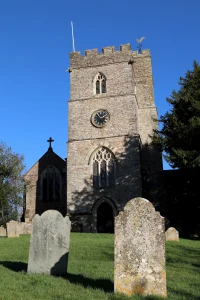
 It costs approximately £500 per week to keep St Michael’s open, all of which must come from regular giving, fund-raising, donations and the like.
We receive nothing from the State (other than tax reclaimed under the GiftAid scheme) or from the Church of England. Indeed we, like all parish churches, pay a substantial levy each year to the Diocese, most of which goes towards clergy salaries and housing costs.
Please consider whether you are able to help in any way, either with a single donation or regular giving, which can be made under the GiftAid scheme if you are a tax payer.
Could you give your time by joining the cleaning or flower rotas or by helping with tea & coffee after the service? And we’re always looking for more congregation members to do readings, intercessions, singing or playing, serving during Communion and sidesman duty.
Please contact the churchwardens if you can help with any of the above.
 A more detailed history and guide to St Michael’s in the form of a booklet is available in the church in return for a donation.
People have worshipped on the site of St Michael’s for many hundreds, and possibly thousands, of years. The large irregular stone which lies outside the West door is thought to be a pagan standing stone, placed in its present position by early Christians to desecrate it.
There may well have been a church here in pre-Conquest times and there are some slight remnants of the Norman church (have a look for the two corbel heads, like mini-gargoyles, in the wall above the porch) which we know of from late 12th Century documents transferring the church from the Wells to to the Exeter Diocese and, in the following century, to the newly founded Abbey of Dunkeswell.
A board at the west end of the nave lists past incumbents going back to 1262, including one Peter Maverick, whose son the puritan Reverend John Maverick took his family to Massachusetts in 1630. His descendants have added two words to the English language – the church guide explains how!
Like many churches of its age, the present building would originally have consisted of just the Nave, probably built around the end of the thirteenth century, and perhaps the Chancel (the eastern end of the church, housing the choir and altar) and the South Transept. Other sections of the building were added later: the Tower dates from the mid 15th century, as does the east end of the northern range which now houses the Lady Chapel. It seems this was added on as a chantry chapel projecting out from the Chancel. (A chantry chapel, in pre-Reformation days, would typically have been built by a wealthy benefactor as a memorial to members of his family and for a priest to say prayers for their souls to speed their passage through Purgatory.)
More was added in the early 16th Century, much by Thomas Chard, born at Tracey in Awliscombe around 1480, who was the last abbot of the great Cistercian Abbey of Forde before it and all other English monasteries were closed down by Henry VIII. This work includes the building of the porch, the conversion of the South Transept into a chantry chapel with it’s magnificent south window (the current glass of course is 19th Century), and probably the unusual stone screen (most screens, particularly in this part of England, were carved from wood).
At the same time the north aisle was added, separated from the nave by a line of pillars, and connecting up with the earlier chantry chapel on that side. Have a look at the ceiling bosses in the north aisle: one shows a man in Tudor dress, another a Green Man – a curiously pagan motif you might think, but nevertheless common in churches at the time.
All these additions make a church which is relatively large for a village church in this area, perhaps reflecting the importance of Awliscombe and the wealth of some of its sons, such as Thomas Chard.
In keeping with this, the six bells in the tower are unusually grand: the lightest being about the same weight as the heaviest at nearby Buckerell, and the heaviest, the ‘tenor’, weighing almost a ton.
The glass in the windows tracks the development of the building itself, from a fragment of medieval glass in the east window of the South Transept, to the fine Victorian glass in the main South, East and West Windows, to the simple beauty of the Ruth Window, installed in 1969 in memory of Miss Ruth Willmington.
 St Michael’s Church, Awliscombe is committed to safeguarding children, young people and adults at risk to worship and grow in Christ safely. Concerns about children, young people and adults at risk will be diligently and promptly responded to according to our procedures, recognising the sensitivity it may hold for those involved.
As a parish / church we have adopted the House of Bishops ‘Promoting a Safer Church’ policy and the Parish Safeguarding Handbook, incorporating the House of Bishop’s Safeguarding Policy and Practice Guidance.
Our PCC has formally adopted this and signed the Safeguarding Policy Statement Promoting a Safer Church.
We have also displayed the Promoting a Safer Church poster prominently within our church / parish.
All those working with children and adults at risk have undergone safer recruitment, received safeguarding training and support.
If you have a concern about the safety of someone or the actions of someone working with children or vulnerable adults, please contact:
Jane Davies by email
More information and links to other groups.
You could also contact the Diocesan Safeguarding Team by email.
If you are a young person and you feel unhappy about something happening to you, you can call Childline on 0800.11.11.